Walk through the research process and learn how to build a study step-by-step
Research Question
Your research questions frame the unknown you are trying to address as a health research study question. It sets out the question that you pose, that can be answered through a research process which comprises data collection and analysis, to address the underknown, generating an answer that can be taken up to guide and ideally change practice and policy.
Your question should be clear and address the objective of your research, and so clearly state the unknown and how you will address it through your research, whether you are setting out to collect new evidence, or asking your question of existing data. A well-set question then forms the basis of your whole study as it guides the method you will use, to address your unknown. A good study focusses only on the question and so a good question sets the path for the study process.
When developing a question, you should be tackling a clear unknown. It is important to take care that the question’s scope is neither too broad nor too narrow. Too broad a scope may result in you gathering far more information than you need or can reasonably handle, while with a scope that is too narrow, you may not find enough information to answer your research question.
Learn more by exploring these e-learning resources:
- The Research Question E-Learning Course
- Introduction to Clinical Research E-Learning Course
- Protocol Development Toolkit
Check out more e-learning resources: Resource Centre
Connect with the community and learn more: Research Clubs
Permissions and Approvals
The first step in planning your study is likely to be gaining approval from your institution, and ethical review committees, and support from your supervisors, whether you work on a ward, in a clinic, a lab or any other healthcare setting. This can be daunting and so working together as a small research team is often helpful and then you can approach this together. Undertaking research in any healthcare setting can bring strong returns on investment in this time, because typically you will be looking to gain evidence to find better ways to prevent, treat or manage disease burdens that matter. The objective is to generate evidence and translate it into recommendations that can, for example, reduce disease burdens. As such, it should be worthwhile for your employer or supervisors to support you with the time and resources needed to undertake this research.
If your study falls under the definition of research involving human participants, then it will need ethics approval. Approval and permission may depend on the following for larger and more complex studies:
- Your country’s legal requirements
- Your institutional requirements
- Your funder’s requirements
- Your collaborator requirements
Typically, many research projects will require review by an Institutional Review Board (IRB) or a scientific review committee, followed by review by a local or national Independent Ethics Committee (IEC). An IEC is an independent body responsible for ensuring the protection of the rights, safety and well-being of human participants involved in a trial. Usually, the institutional review will ensure the science is valid, that the benefits of the study outweigh the risks, the community and patients are appropriately engaged, and that the research has social value locally. The review will also consider administrative, operational and financial issues such as whether the study will impact on other programmes, if there is the appropriate staff capacity and whether the finances are in order. If your study is a locally-led pragmatic study the local IRB and ethics committees usually waive any fee. You should certainly ask.
ClinRegs is an online database of country-specific clinical research regulatory information designed to assist in planning and implementing international clinical research. The database provides consolidated access to country-level regulatory requirements from around the world.
Learn more by exploring these e-learning resources:
- Introduction to Informed Consent
- Essential Elements of Ethics
- Research Ethics in Epidemics, Pandemics and Disaster Situations
- Children and Clinical Research
- Ethics and Best Practices for Sharing Individual-Level Data in Clinical and Public Health Research
- Ancillary Care
- Ethics Review of Social Research on Health-Related Topics
- Ethical Community Engagement and Involvement (CEI) in Health Research: Introduction and Practical Guide
- Global Health Research Process Map
- ClinRegs
Connect with the community and learn more about: Global Health Bioethics
Connect with the community and learn more about: Research Clubs
Check out more e-learning resources: Resource Centre
Study Design
Health research comprises many form of studies. Any disease requires a whole ecosystem of types of data to prevent, manage and treat to be tackled.
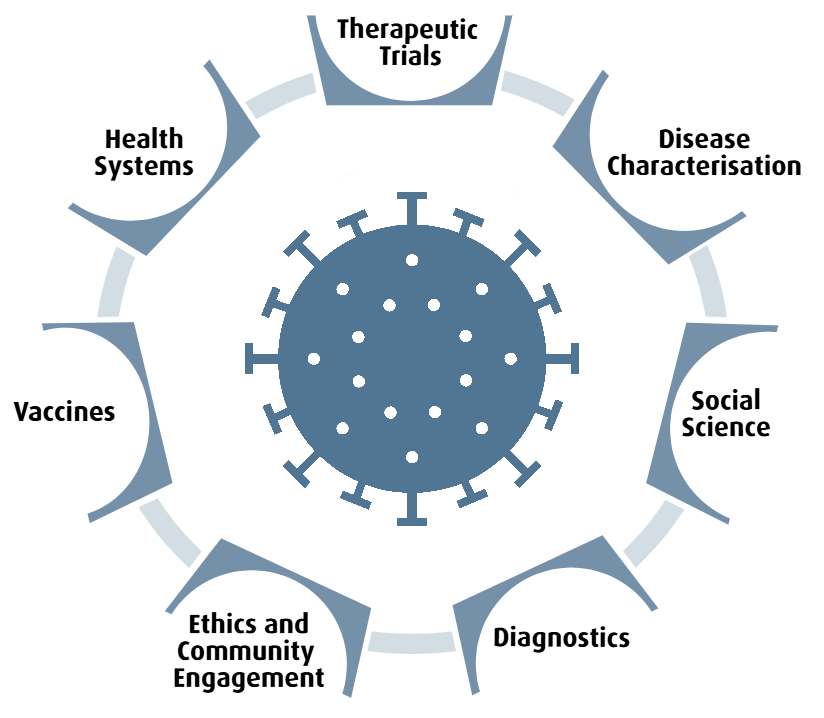
The design used in any study is dependent on the question being investigated and the type of research.
Your research question could be answered by analysing existing data or samples, or you might need to collect new evidence.
Below are some examples of health research study designs:
- Cohort study design follows specific groups of people (e.g. those with a disease, with exposure to a treatment or who are alike but for one lifestyle factor such as occupation or high alcohol consumption etc.) over a period of time to see how outcomes differ when they receive different treatments and interventions.
- In case control studies, cases are matched and compared with controls to measure the impact of an intervention or disease. People with a specific disease or experiencing a specific intervention (the cases) are compared with individuals who do not have the disease or have not experienced the intervention (the controls). Once matched data is collected from both groups, it is then compared to investigate whether other characteristics (e.g. nutrition) are different.
- In Cross Sectional Studies, surveys are used to gather information from a specified number of cases (e.g. individuals, systems, etc) in a population at a single point in time. The design is used to examine factors expected to remain unchanged during the period of data collection. These surveys are a basic variety of descriptive or observational epidemiology. Cross-sectional studies are not restricted to surveys, they may also gather biological samples, for example, to study the prevalence of an infection. This study design can be relatively quick and easy to implement but it does not allow for a distinction to be made between cause and effect.
- Case reports are the detailed histories of single cases. They provide the symptoms, signs, diagnosis, treatment, and follow-up of an individual patient. The advantage of this type of design is that case reports allow us to uncover unexpected effects, new diseases, etc., which can lead to increased knowledge.
- Randomised controlled trials (RCTs) allow data on the safety and efficacy of health interventions (e.g., drugs, diagnostics, devices, therapy protocols) to be collected. Trials can be conducted using healthy volunteers or patients, depending on what the trial is investigating and its stage of development.
- Observational studies comprise a whole range of different methods. They are commonly used to observe practice, for example in a critical care ward, to inform improvements in practice and service delivery. Often, in observational studies, checklists are used to guide data collection and what observations to record.
- Qualitative studies are used to explore the social and cultural context for healthcare, treatment and prevention. Methods include open-ended interviews and focus group discussions with purposively selected participants and data is in the form of transcribed narratives.
Learn more by exploring these e-learning resources:
- Introduction to Clinical Research
- ICH Good Clinical Practice (GCP)
- The Study Protocol
- Introduction to Informed Consent
- Protocol Development
- Protocol Development Toolkit
Connect with the community and learn more: Research Clubs
Check out more e-learning resources: Resource Centre
Data Management
Data management begins with the development of the data management plan and design of the data capture instrument (e.g. such as a case report form, or questionnaire or laboratory form). It continues with data collection, the implementation of appropriately robust built-in quality control procedures, database cleaning, database locking then safe data storage and analysis. Data should be preserved and made accessible so that additional research questions can be explored in the future, including by other researchers using the existing dataset.
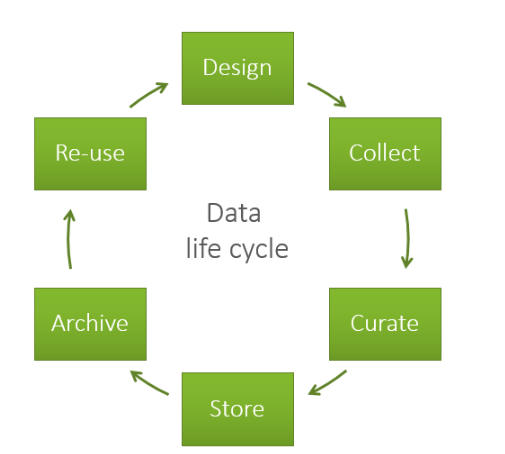
The data life cycle describes the stages through which research data passes, from initial planning to long-term reuse. It begins with the design phase, where data requirements and methods are defined, followed by data collection. Collected data must then be curated to ensure quality, consistency and accuracy. Secure storage is essential to protect data during and after a project. Archiving allows data to be preserved for future reference and compliance purposes. Finally, data reuse enables researchers and organisations to maximise the value of existing datasets, supporting collaboration and new discoveries while reducing duplication of effort and research waste.
Learn more by exploring these e-learning resources:
- The Data Life Cycle: Practices and Policies
- Introduction to Data Management for Clinical Research Studies
- Data Management Framework
- Data Management Portal
- Introduction to Collecting and Reporting Adverse Events
- Data Safety and Monitoring Boards in Clinical Trials
- Spotlight on R
Connect with the community and learn more: Data Science Hub
Connect with the community and learn more: Research Clubs
Check out more e-learning resources: Resource Centre
Community Engagement
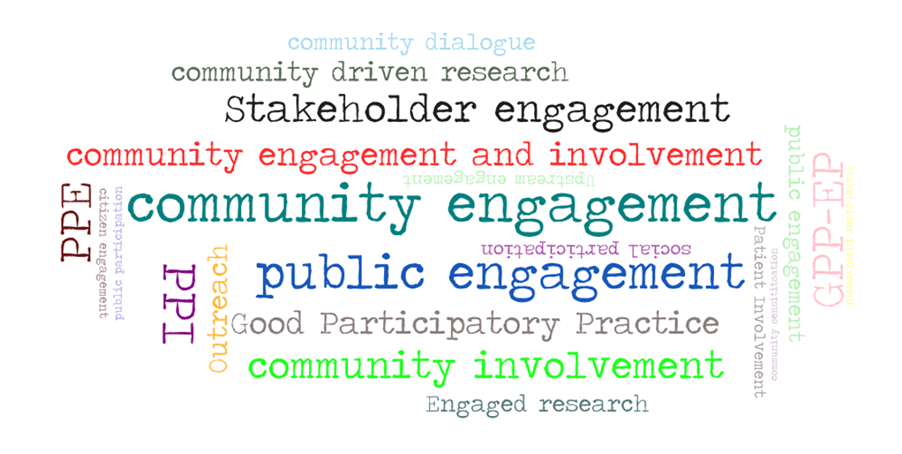
There are several overlapping terms that are used when talking about engaging non-researchers with health research. These terms include public engagement, community engagement, public outreach, public and patient involvement, co-production, and participation. Each is defined differently by different organisations and individuals, but the broad aims are to include the perspectives and views of publics, communities, stakeholders in the way health research is prioritised, planned, implemented, analysed and disseminated.
The importance of engaging local communities in health research has been gaining significance in recent years, and research funders and guidelines are increasingly demanding engagement at each step of the research process.
Key stakeholders that could be engaged depending on the nature of your study include patients, caretakers, community members and leaders, faith leaders/groups, law/policymakers, civil society organisations, and non-governmental organisations.
Engagement methods vary widely from local townhall meetings to social media engagement, mass-media engagement and Patient and Public Involvement and Engagement (PPIE) groups. All of these methods are aimed at making research responsive to patient and community needs and perspectives.
Learn more by exploring these e-learning resources:
- The comprehensive online training in Community Engagement and Involvement with Global Health Research
- A Practical Guide to Planning an Engagement Strategy for your Global Health Research
- Mesh Guide to setting up an Advisory/involvement group
- Ziauddin University Toolkit for Patient & Public Involvement and Engagement (PPIE)
- Low-cost and Upstream Engagement for Funding Proposals
Connect with the community and learn more: mesh
Connect with the community and learn more: Research Clubs
Check out more e-learning resources: Resource Centre
Taking research finding into uptake and use
The use of your evidence should be something you plan for at the start of considering your research, how your findings will be taken up and put into practice to tackle the unknown you set out to address. Your research can be written up as a journal article; however you should also plan for how your findings will be translated into recommendations.
Turning your evidence into clear findings and recommendations is an important process where you first think about who your target audience is and then turn your recommendations into accessible sharable dissemination forms such as toolkits or training materials that could be shared through workshops or perhaps community meetings. This will depend on the unknown that your research study is setting to address. Suppose your research study implemented some kind of intervention in your setting, and it improved outcomes. Then you might want to create new care, prevention or management guidance. You may then wish to create a plan to implement that intervention in different settings to widen the impact of your research further than your own healthcare setting. You may wish to develop a toolkit on implementing your intervention so that others in similar settings can test it out in their contexts too. You may find that your intervention is working so well in so many settings that a policy paper can be drafted, and policy recommendations can be made. Another valuable way to disseminate your work might be through a simple but instructive communication poster. Whatever it may be, you can think about how to maximize the impact of your research study.
Failure to translate research findings into practice or policy or both, prevents research from achieving maximum public health benefit. Despite substantial investment in clinical research in HIV/AIDS, tuberculosis and malaria, the exploitation and use of research results beyond academia is often limited.
Learn more by exploring these e-learning resources:
- Tools for Scientific Dissemination
- Scientific Publication
- Translating Research into Policy: Process Steps
- Translating Research into Policy
- Podcast: Research to Policy Case Series
- Research Communication Poster
Connect with the community and learn more: mesh, Translating Research into Policy: Process Steps
Connect with the community and learn more: Research Clubs
Check out more e-learning resources: Resource Centre
How The Global Health Network Supports Career Development
The Global Health Network is creating career opportunities for healthcare workers by making research skills accessible, practical and relevant to everyday practice. Many professionals wish to improve care through evidence, yet lack formal training or support to take part in research. Through free online courses, practical tools, communities of practice, regional activities and formal qualifications such as the Postgraduate Diploma in Global Health Research, the Network helps individuals gain confidence, develop new skills and progress in their careers.
Learning is grounded in real settings. A nurse can design a study for a local challenge. A midwife can strengthen community engagement. A laboratory scientist can improve data quality. A research manager can navigate ethics and regulation. As skills grow, so do opportunities. Many members begin with short courses, then join communities, use tools such as the Study Builder or Pathfinder, and later move into new research roles or pursue formal qualifications.
The videos below share these experiences first hand through the voices of healthcare workers.